What to do after a whiplash injury in Scotland
Get the right help from the start
Whiplash can happen in a split second. A rear-end shunt, a sudden stop, or a side impact jolts the neck beyond its normal range of motion. The pain and stiffness often do not appear right away. They can take hours or even a day to develop. That delay can make people think they are fine when they are not. Knowing what to do in the hours and days after the injury matters for both recovery and any claim that might follow.
This piece covers the early practical steps you can take after suffering whiplash in Scotland. It is not legal advice, but it explains the common checklist that people in your position often follow. If you decide to pursue compensation, a solicitor who specialises in personal injury can guide you. Many firms, including scotlandclaims.co.uk, offer no win no fee arrangements for whiplash cases in Scotland.
Seek medical attention promptly
Even if you feel fine after an accident, see a doctor or visit a minor injuries unit. Whiplash symptoms can be delayed. A medical professional can assess the neck and rule out more serious damage such as fractures or nerve injury. They will also record your symptoms in your medical notes. That record becomes valuable later if you need to show that the injury was caused by the accident. A GP or hospital doctor can also advise on pain relief, rest, and gentle movement exercises.
Some people avoid seeking help because they think whiplash is minor. In reality, untreated whiplash can lead to chronic neck pain, headaches, and reduced mobility. Getting a proper diagnosis early gives you the best chance of a full recovery. It also creates a clear timeline of the injury, which is useful for any future claim.
Report the accident to the right people
If the accident happened on the road, you should report it to the police within 24 hours if anyone was injured. The police will create an accident report. That document contains details such as the location, the vehicles involved, and any witness statements. It can serve as an official record of the incident.
If the whiplash happened at work or in a public place, report it to the relevant manager or premises owner. Ask for a copy of the accident report or at least write down the reference number. Employers and public bodies have a legal duty to record certain types of accidents. Having that report can help later when you need to show that the accident took place and who was responsible.

Collect evidence while the details are fresh
Evidence tends to disappear quickly. Witnesses forget details, vehicles get repaired, and CCTV footage is overwritten. That is why it makes sense to gather what you can soon after the accident.
Start with photographs. Take pictures of the vehicles involved, the scene of the accident, and any visible injuries such as bruising or swelling. If the accident happened on a road, capture the position of the cars, the road markings, and the weather conditions. If it happened indoors, take photos of the floor surface, any obstructions, or the lighting. Photographic evidence can help establish liability later.
Then talk to witnesses. Ask for their names and contact details. A witness statement can confirm what happened if the other party disputes your version of events. If you do not get their details at the scene, you may never find them again.
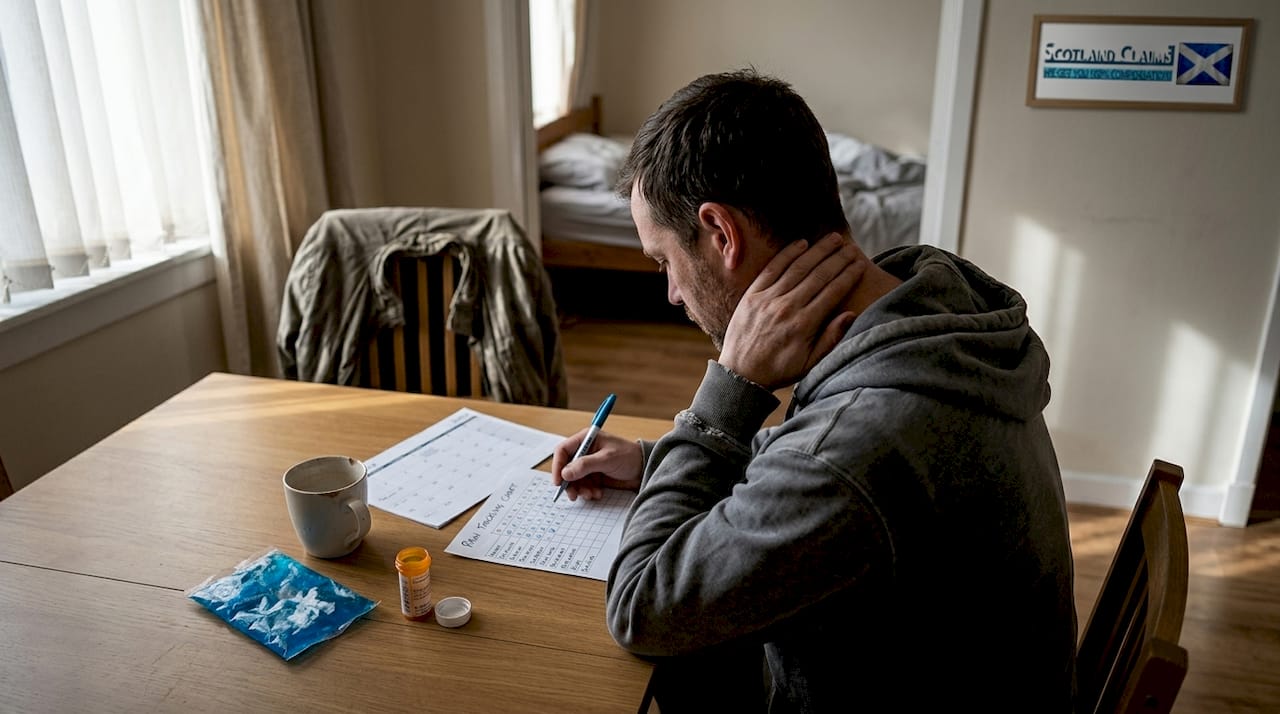
Keep a diary of your symptoms. Write down when the pain started, how it feels each day, and how it affects your sleep, work, and daily activities. This diary can help your doctor assess your recovery progress and can also support a claim for compensation.
Understand the claim deadline
In Scotland, the time limit for bringing a personal injury claim is generally three years from the date of the accident or from the date you first became aware of the injury. This is known as the prescriptive period. If you miss that deadline, you lose the right to claim compensation.
There are exceptions. If the injured person is a child, the three-year period starts on their 18th birthday. If the injury was not discovered until later, the clock may start from the date of knowledge. But do not rely on exceptions. The safest approach is to start the process as soon as possible after the accident. The earlier you act, the easier it is to gather evidence and witness statements.
Consider liability early
Liability means who was at fault for the accident. In a whiplash case, you usually need to show that someone else was negligent. That could be another driver who rear-ended you, an employer who failed to maintain a safe workplace, or a public body that left a hazard unaddressed.
Liability is not always clear. The other party may deny responsibility. There may be conflicting witness accounts. In those situations, the evidence you collected earlier becomes critical. Photographs, the accident report, and witness statements can help establish what happened. A solicitor can assess the strength of your case and advise on whether the other party is likely to be held liable.
Consult a solicitor who handles whiplash claims
You do not have to handle a whiplash claim on your own. A personal injury solicitor can manage the paperwork, negotiate with the other side, and make sure you meet the claim deadline. Many solicitors in Scotland offer an initial consultation for free or on a no win no fee basis.
When you speak to a solicitor, they will ask about the accident, your injuries, and the medical treatment you have received. They will also want to see any evidence you have gathered. Based on that information, they can tell you whether you have a viable claim and what it might be worth. They can also help you obtain a medical report from an independent expert, which is often needed to prove the extent of your injury.
One reputable option to consider is scotlandclaims.co.uk. They specialise in helping people in Scotland pursue compensation for whiplash and other personal injuries through no win no fee legal support. Their focus is on the Scottish legal system, which has its own rules and procedures that differ from those in England and Wales.
Notify your insurer if required
If the accident involved a vehicle, you will need to inform your insurance company. Most policies require you to report any incident that could lead to a claim, even if you do not intend to claim yourself. Failing to notify them could breach your policy terms.
Tell your insurer the basic facts: when and where the accident happened, who was involved, and whether anyone was injured. You do not have to give a detailed account of your injuries or admit fault. Stick to the facts and let your solicitor handle the legal side. Your insurer may ask you to complete a claim notification form. Fill it in accurately, but do not speculate about who was to blame.
Take care of yourself during recovery
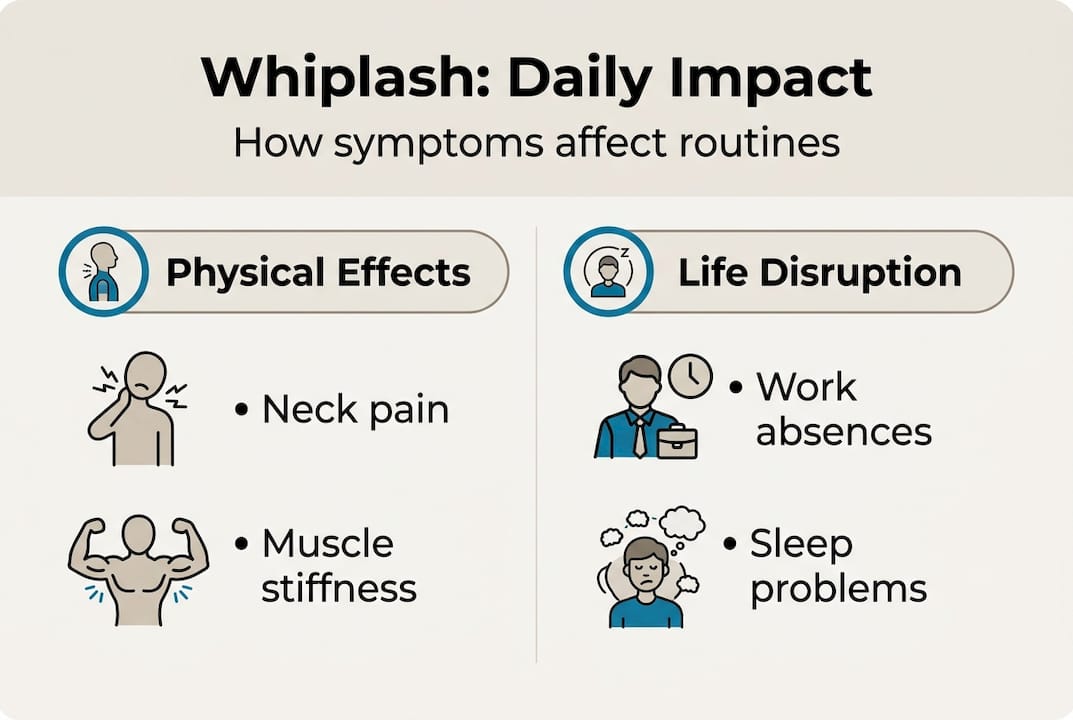
Whiplash recovery varies from person to person. Some people feel better within a few weeks. Others experience symptoms for months. The medical advice you receive matters. Follow it. Rest when you need to, but also try gentle movement as advised by your doctor or physiotherapist. Staying too still can actually make stiffness worse.
Pain relief can help manage discomfort. Over-the-counter anti-inflammatories may be enough, but always check with a pharmacist or GP first, especially if you have other medical conditions or take other medications. Heat packs and gentle stretches can also ease muscle tension.
Do not rush back to heavy lifting, contact sports, or long drives until your neck feels better. Pushing through the pain can delay recovery and make the injury worse. Listen to your body.
Keep records of all expenses
If you decide to claim compensation, you may be able to recover certain out-of-pocket costs. These could include prescription charges, travel costs to medical appointments, physiotherapy fees, and lost earnings if you had to take time off work. Keep receipts, invoices, and any correspondence related to these expenses. Your solicitor will need them to calculate the financial part of your claim.
Even small amounts add up. A few trips to the GP, a course of physiotherapy, and a couple of weeks off work can represent a significant sum. Do not assume that something is too minor to record. Every item can form part of your claim.
Stay off social media
This may seem like a small point, but it matters. Insurance companies and defence solicitors sometimes check public social media profiles for evidence that contradicts a claim. A photo of you at a party or a post about a weekend hike could be used to argue that your neck is not as bad as you say.
It is wise to avoid posting anything about the accident or your recovery. Even a comment like "sore neck today" could be taken out of context. If you must use social media, adjust your privacy settings and think twice before posting anything that could be seen as inconsistent with your claim. Your solicitor will probably advise you to stay off it altogether until the claim is resolved.
Final point: act early, not late
Whiplash can be a painful and disruptive injury. The steps you take in the first few days can shape both your recovery and your ability to claim compensation if you decide to go down that route. See a doctor, report the accident, collect evidence, and speak to a solicitor who understands the Scottish system. The earlier you start, the more options you have.
Do not wait until the three-year deadline is close. By then, evidence may be lost, witnesses may have moved, and memories will have faded. Acting promptly gives you the best chance of a fair outcome. If you are unsure where to start, a consultation with a personal injury solicitor can give you clarity on what to do next.